Showing posts with label Wildlife. Show all posts

Thursday, February 24, 2011

Wild & Scenic Films

On Tuesday, Feb. 22, conservation group Cascadia Wildlands will host Patagonia’s fourth annual Wild and Scenic Film Festival at the UO campus. The festival hopes to yield donations to support the preservation of species at risk in the Cascade region, and in doing so it will continue to fulfill the group’s mission to “educate, agitate, and inspire a movement to protect and restore Cascadia’s wild ecosystems.”

Co-sponsored by the UO Outdoor Program, Ninkasi, Tactics and Backcountry Gear, Cascadia Wildlands hopes to draw a large crowd of folks hungry to view the nine films that adorn the evening’s bill. Wild and Scenic intends to be a smorgasbord of projects, from displaying films that provide commentary on the state of global outdoors, to showing human-nature interactions with didactic stories and stunning footage. Among said stories is Skier’s Journey: Kashmir, which documents a pair of skiers and their experience in search of a spot to ski in the Himalayas.


Another attraction is The Greatest Migration, a 20-minute piece made by local filmmaker and outdoor adventurer Trip Jennings, which documents the daunting migratory habits of Snake River salmon as they struggle to survive an onslaught of dams and hazards along the path to their spawning grounds, some 7,000 feet above sea level. The film aids Oregonians — residents who need to be especially conscious of salmon — in thinking closely about human impact on local river systems.

“We want to pack the house, connect with the community and provide them with an affordable night of cutting edge-film that isn’t Hollywood,” said Cascadia Wildlands Campaign Director Josh Laughlin. “It’s not a large fundraiser for us, rather a community—builder where we can show off some powerful film and introduce community members to the conservation work of Cascadia Wildlands.”

“It’s a compelling mix of thrilling backcountry adventure and powerful campaigns working to safeguard the Earth,” said Laughlin.

The films will be shown from 7 to 10 pm in 180 PLC at the UO campus. Tickets are $7 for the general public. More information on the festival at www.cascwild.org

EW 2/17

Wednesday, August 4, 2010

Wildlife Services: A Vicious Cycle

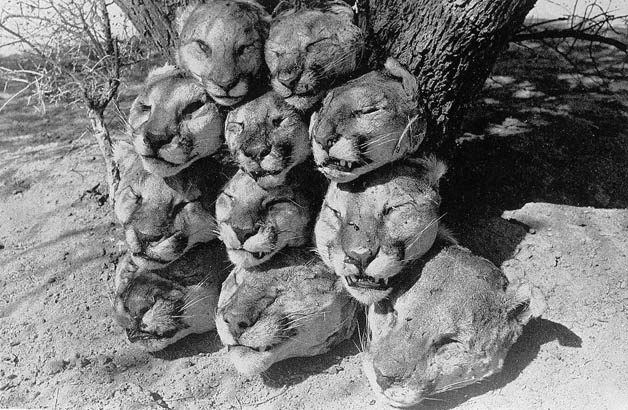
In 2007, Wildlife Services spent upwards of a $100 million in order to control predatory attacks. By the time the year was over, Wildlife Services had become responsible for over 100,000 animal deaths—coyotes, cougars, cats and dogs among them.

Every year livestock and cattle owners across the Northwest still call in the government’s Wildlife Services program in order to deal with predators that threaten their animals. For some, Wildlife Services seems like an excellent source to turn to when no other means of protection is available. Many others, however, see Wildlife Services as a nuisance. The general consensus among those who disagree with the policies of Wildlife Services is that the information readily available and advertised to the public is quite different to the reality found beneath the surface. For example, the extermination of rabid raccoons is advertised as a solution that Wildlife Services provides, and the public rarely disapproves of this activity due to the dangerous nature of rabies. However, by advertising such services, other happenings such as the indiscriminate killing of wolves, cougars, bears and coyote are swiftly thrown out of the limelight.


Photo: Cougar heads killed by Wildlife Services - predatordefense.org

Despite their attempts to protect the livestock industry, Wildlife Services has seemingly worsened the problem: Long time researcher of Wildlife Services, George Wuerthner, says: “Indiscriminately killing predators skews the age of a population over time…leaving a higher percentage of young, inexperienced predators that are far more likely to target livestock.” In this, Wuerthner explains the beginnings of a vicious cycle created by Wildlife Services: A livestock owner calls in a troublesome predator, several animals are killed (among them a large population of older, more experienced hunters) and inexperienced hunters are left to once again target livestock. After this, the cycle repeats.

Part of the reason that this cycle exists is due to the fact that there are no hunting laws in Oregon and so farmers and livestock owners often have no incentive to properly protect their animals. “In Chile, the farmers take protective measures like cattle sheds and corral fences to protect their livestock because there are laws against killing predators,” says Wuerthner, who recently returned from Chile. “In the Northwest there are no laws in place and so it’s easier just to call in Wildlife Services.”

Statistically, predator attacks play a far smaller part in the death of livestock than disease, poisonous plants and injury, but predators are treated differently because, well, you can’t shoot a disease. Death happens, but hunting and killing predators indiscriminately solves nothing—it just worsens the problem.

For more Information: http://www.predatordefense.org/USDA.htm